English
 русский

Founded in 2008, Ningbo Huali Steel Co., Ltd. produces cold-rolled precision stainless strip from 0.01 mm to 3.0 mm, along with FeCrAl, nickel-based alloys, titanium and titanium alloys. The plant runs a US-imported 20-high Sendzimir mill, four continuous bright annealing furnaces, a 23-roll tension leveller and five slitting lines, serving home appliances, automotive, 3C electronics and specialty alloy sectors.

What does Ningbo Huali Steel look like today?
The plant is located in the Pingtang Industrial Zone, Dongwu Town, Yinzhou District, Ningbo, Zhejiang Province, and covers about 5,000 ㎡ across rolling, annealing, tension levelling, slitting and inspection. Its 68 employees work in four departments and ten functional units under a deliberately flat structure: the General Manager sets strategy, the management team coordinates operations, and Sales & Marketing, General Administration, Production, and Quality & Technology run in parallel rather than in sequence.
What equipment is in the workshop?
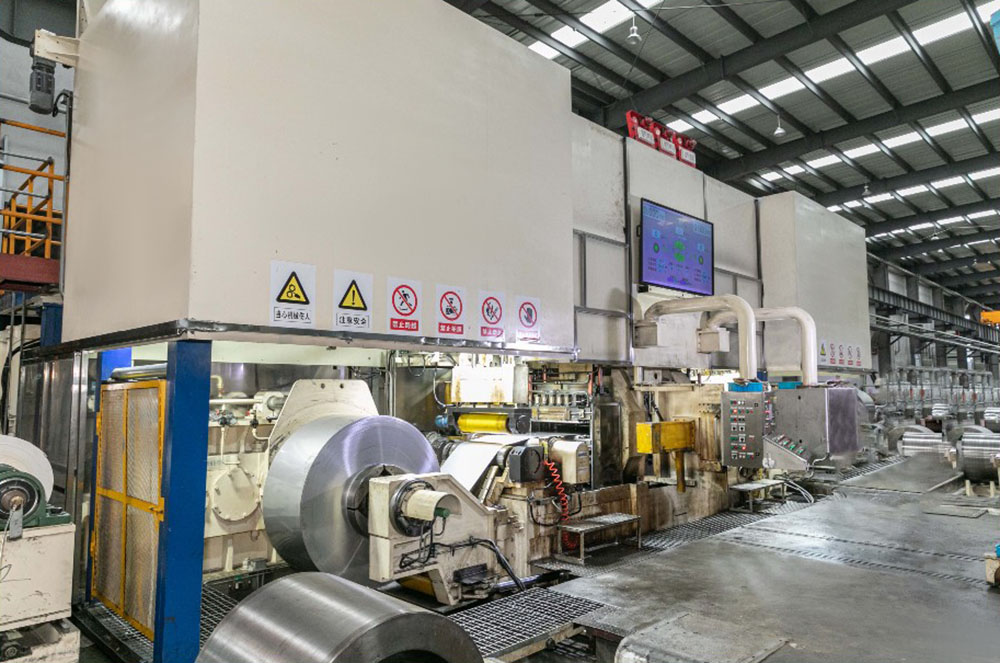
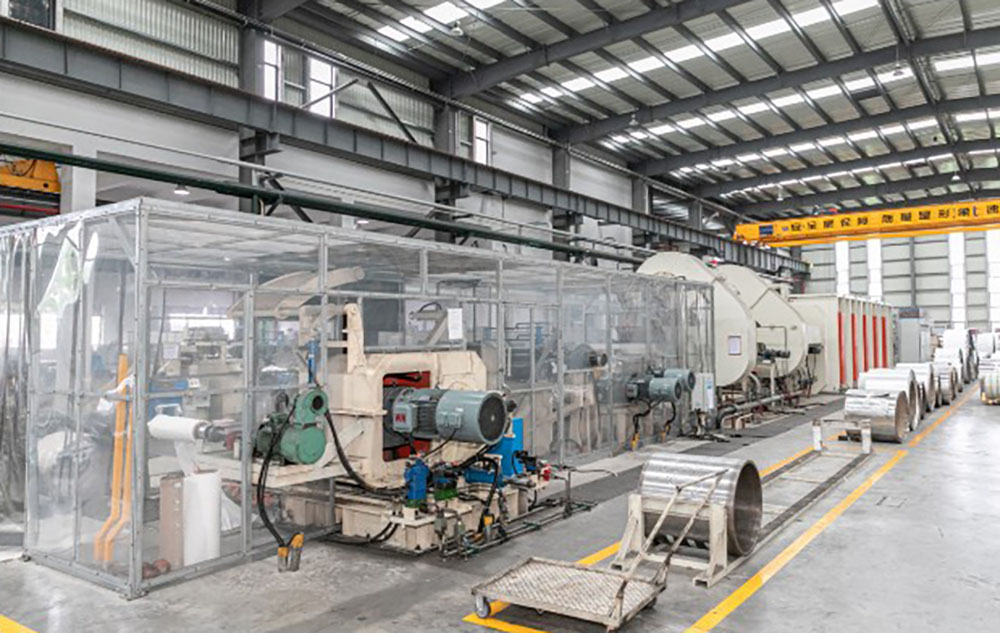
Five types of units support the entire product range. Each is configured for thin gauges, because tolerance and surface quality are decided right here.
Equipment
|
Unit |
Key parameters |
Function |
|
US-made 20-high Sendzimir cold rolling mill |
650 m/min, AGC automatic gauge control, automatic roll-stack configuration, overall tolerance held within ±0.002 mm |
Rolls 0.01–3.0 mm strip with automatic thickness correction |
|
Coil cleaning line |
Cleanliness reaches baseline 48, circulating-water washing |
Removes rolling oil and surface residue before annealing or shipment |
|
4 horizontal continuous bright annealing furnaces |
Minimum 0.02 mm, up to 200 t per day |
Completes recrystallisation and produces a bright, oxide-free surface |
|
23-roll tension leveller |
In-line automatic surface inspection, defect alarm, long-distance defect logging |
Controls flatness and camber, and records the position of every defect |
|
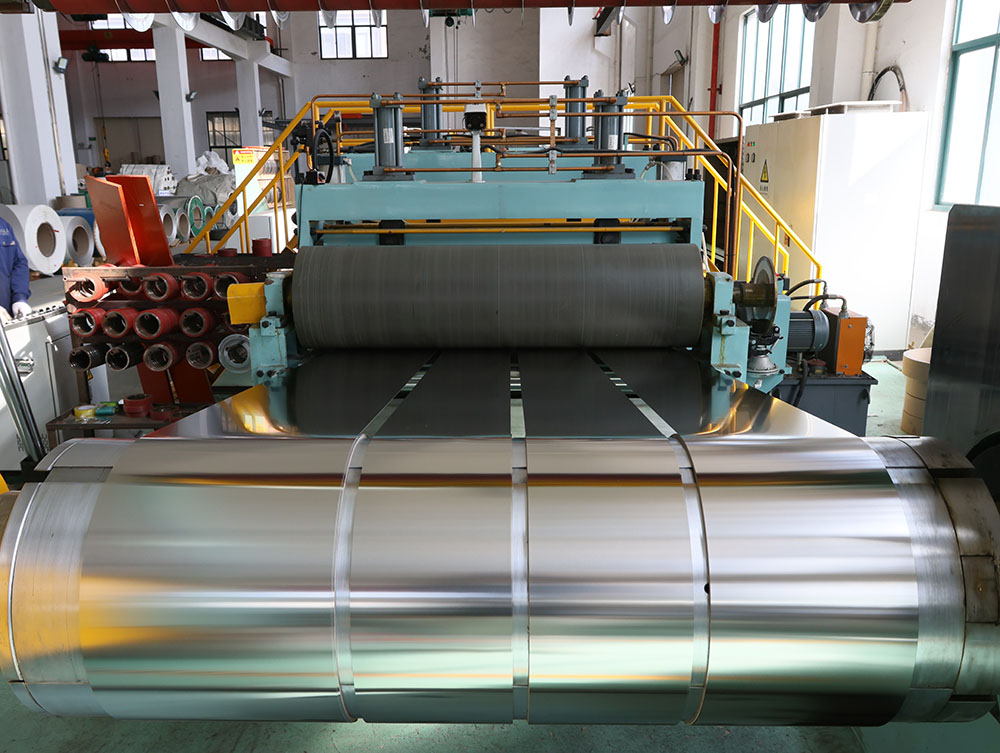
5 slitting lines |
Minimum 0.01 mm, maximum width 1,219 mm, maximum line speed 220 m/min |
Slits to narrow widths with controlled burr and edge quality |
|
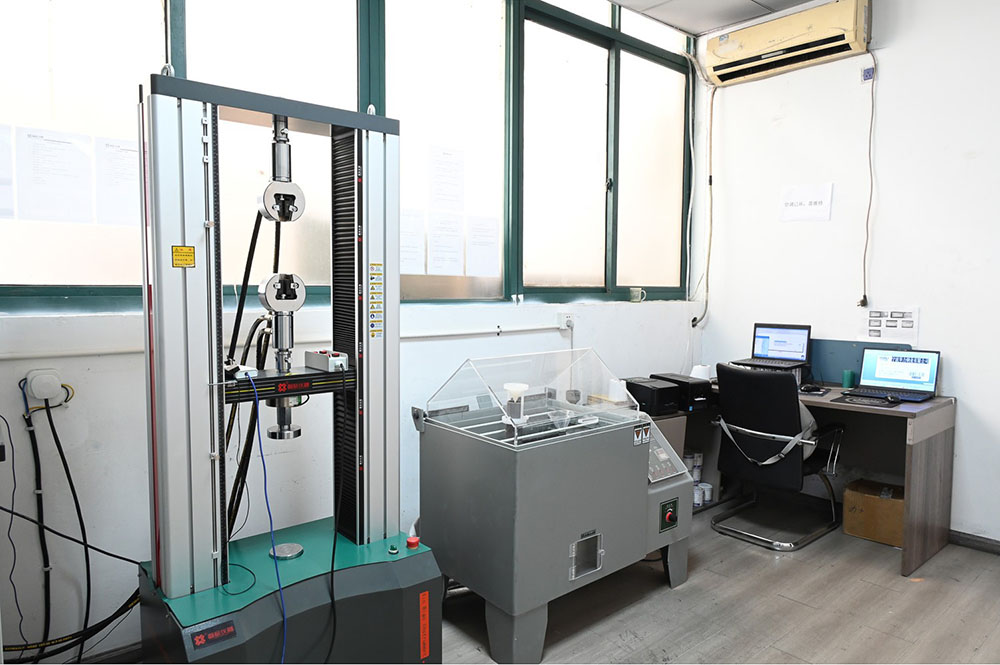
In-house testing laboratory |
Hardness testers (Vickers/Rockwell/Brinell), spectrometer, salt-spray chamber, tensile testing machine |
Verifies composition, mechanical properties and corrosion resistance |
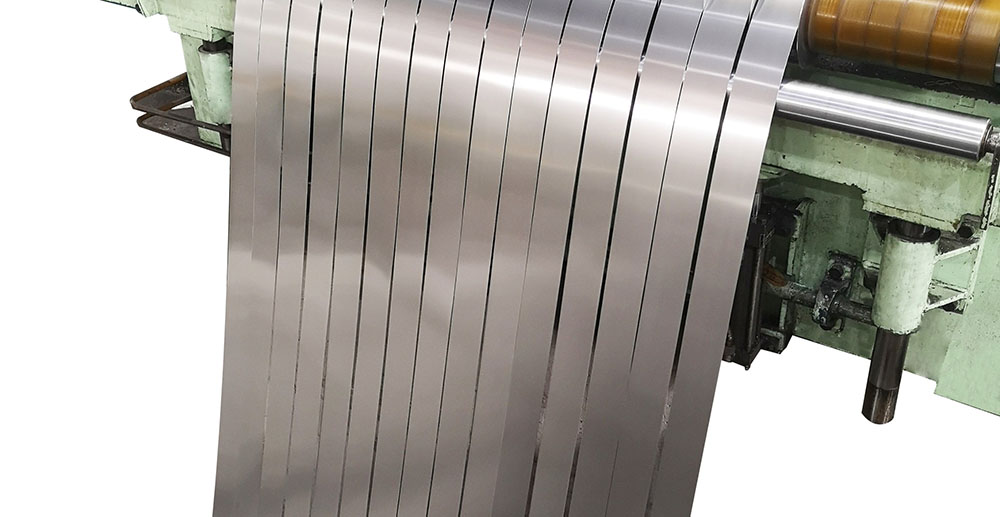
Strip passes through eight stages without ever leaving the plant: raw-material slitting, recoiling and preparation, 20-high cold rolling, degreasing, bright annealing, skin passing, tension levelling and finished-goods slitting. Keeping all eight steps under one roof is what makes 0.01 mm orders practical; every transfer between plants adds handling damage, one more queue, and one more dispute over which side owns a defect.
What strip does this plant actually make?
The 300 series accounts for 44% of capacity, a typical mix for suppliers to appliance and automotive stampers. Specialty steel takes a smaller 12% share, but it is far more distinctive.
PRODUCT OUTLINE
|
Steel Type |
Thickness |
Specifications |
Hard products |
Soft products |
Total |
Proportion |
||
|
Capacity |
Proportion |
Capacity |
Proportion |
|||||
|
300 series |
0.03<T<0.08 |
0.05 |
1300 |
3.33% |
|
|
1300 |
3.33% |
|
0.08<T ≤ 0.15 |
0.1 |
6500 |
16.67% |
|
|
6500 |
16.67% |
|
|
0.15<T ≤ 0.30 |
0.25 |
7800 |
20.00% |
650 |
1.67% |
8450 |
21.67% |
|
|
0.30<T<0.60 |
0.4 |
6500 |
16.67% |
520 |
1.33% |
7020 |
18.00% |
|
|
|
Subtotal |
22100 |
56.67% |
1170 |
3.00% |
59.67% |
59.67% |
|
|
400series |
0.03 ≤ T ≤ 0.08 |
0.03 |
1500 |
3.33% |
|
|
1500 |
3.33% |
|
0.08<T<0.15 |
0.1 |
1500 |
3.33% |
|
|
1500 |
3.33% |
|
|
0.15<T<0.30 |
0.25 |
|
|
130 |
0.33% |
130 |
0.33% |
|
|
0.30<T ≤ 0.60 |
0.4 |
|
|
13000 |
33.33% |
13000 |
33.33% |
|
|
|
Subtotal |
3000 |
6.67% |
13130 |
33.67% |
40.33% |
40.32% |
|
|
Total |
25100 |
63.33% |
14170 |
36.67% |
39270 |
100.00% |
||
Thickness distribution and tolerance
II. Thickness Tolerance (Unit: mm)
Note: The thickness can be designed according to the customer's actual requirements.
|
Nominal thickness |
15≤width<100 |
100≤width<500 |
500≤width<1250 |
|
≥0.03~<0.05 |
±0.003 |
±0.003 |
±0.004 |
|
≥0.05~<0.10 |
±0.004 |
±0.005 |
±0.005 |
|
≥0.10~<0.25 |
±0.006 |
±0.006 |
±0.006 |
|
≥0.25~<0.40 |
±0.007 |
±0.007 |
±0.008 |
|
≥0.40~<0.60 |
±0.010 |
±0.010 |
±0.012 |
|
≥0.60~<0.80 |
±0.012 |
±0.012 |
±0.015 |
|
≥0.80~<1.00 |
±0.015 |
±0.015 |
±0.020 |
|
≥1.00~<1.25 |
±0.020 |
±0.020 |
±0.025 |
|
≥1.25~<1.50 |
±0.025 |
±0.025 |
±0.030 |
Special requirements for thickness tolerance can be negotiated between the supplier and the buyer, but the tolerance value should be within the range listed in the table.
Where does the strip finally end up?
Output is absorbed by a wide range of industries.
Application mix
|
Sector |
Share |
Thickness used |
Common grades |
Typical parts |
|
Home appliances |
35% |
0.3 – 1.0 mm |
430, 304 etc. |
Heating tubes, refrigerator shells and liners, washing machine drums and panels, spring brackets, metal frames |
|
Automotive |
25% |
0.04 – 2.0 mm |
304, 301, 409L, 321 etc. |
Heat shields, cylinder-head gaskets, exhaust systems, brake retaining clips, bellows |
|
3C electronics |
15% |
0.03 – 0.3 mm |
304, 301, 316L etc. |
Laptops, hard-disk storage, smartphone heat sinks, display panels, battery covers |
|
Others |
25% |
0.01 – 3.0 mm |
301, 304, 316L, 430, 0Cr21Al6 etc. |
Solar panels, button cells, hypodermic needles, electric shavers, infrared cookers |